
Ever considered that your business might be tiptoeing into the invisible web of social media dangers? Has the idea of potential cyber threats linked with your social media use crossed your mind? Social media, once a basic tool for interaction, has now become a potential gateway for cyber breaches.
Your business reputation, customer data privacy, your valuable information, and even your team's safety might be at stake. It's critical for business operators and stakeholders to understand the weight of a well-thought-out social media strategy reinforced by robust cybersecurity measures.
In this Darkhorse Dental IT blog, we dive into the cyber risks tied to social media usage and chart a course for the precautions your business and employees need to take to combat them.
01The perils of social media in the cybersecurity landscape
Social media has intertwined with our daily lives in the digital era. From sharing memorable snaps and side-splitting memes to connecting with loved ones around the world, social media has revolutionized communication. Yet with each passing year, the cybersecurity risks linked to these accounts swell. Cybercriminals zero in on these platforms, and in the wrong hands, your personal and business details could fuel illegal activities.
The malicious acts range from data mining, social engineering attacks that target employees' personal accounts or company information on public platforms, and phishing scams poised to steal confidential data or funds, to reputation damage caused by misinformation.

So remember to be careful about the information you share on social media, and take measures to guard your business against these lurking threats.
Data mining
In essence, social media was designed to be social. Thus, it's an information-sharing freeway, and one where cybercriminals are speeding in the fast lane. As data is shared on social media, the criminals in the shadows are mining it.
Data mining extracts valuable insights from extensive datasets, uncovering hidden patterns, connections, and trends. While businesses employ this tool to gain customer insight and market share knowledge, cybercriminals exploit it to collect data from various platforms, laying the groundwork for disaster. Everything is fair game: family details, personal interests, and even insight that might lead to cracking a sensitive password.
Social engineering
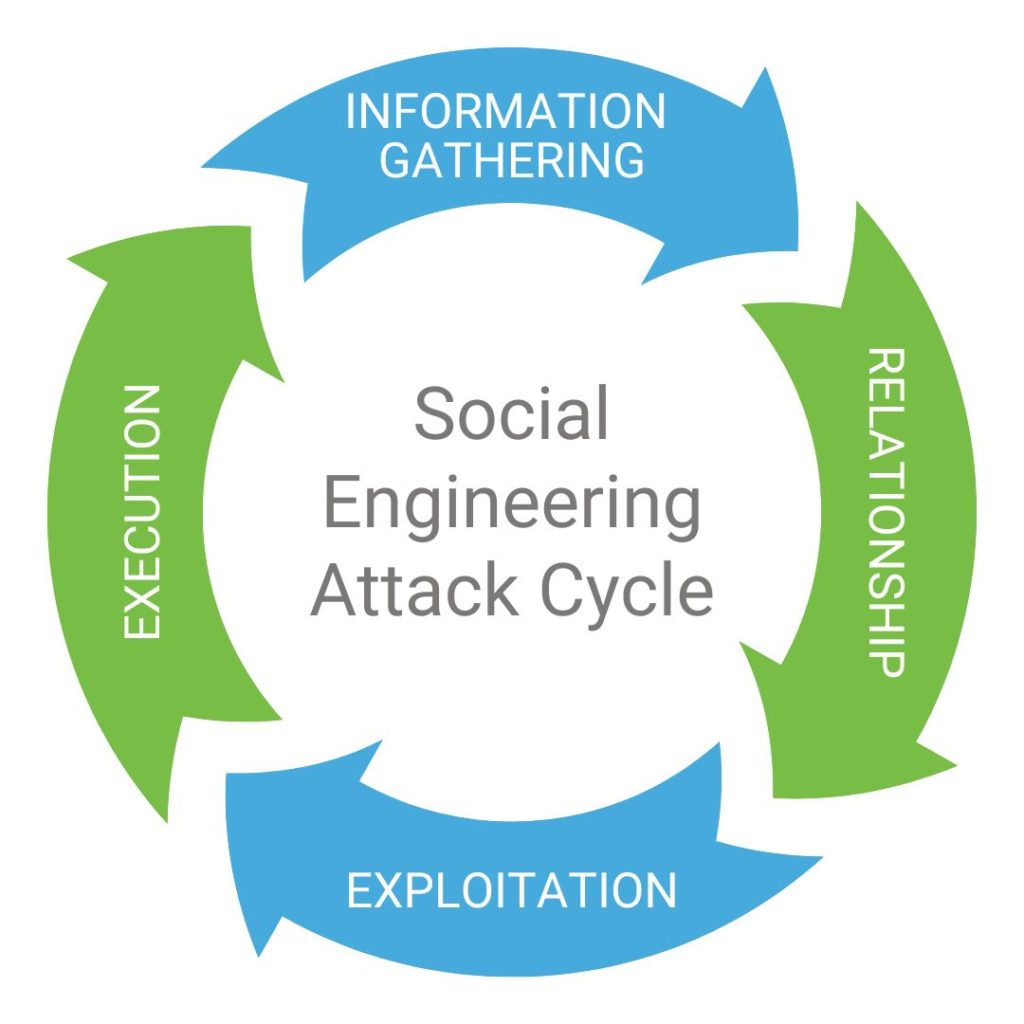
Social engineering is the crafty technique cybercriminals use to earn their targets' trust, luring them to drop their guard and spill sensitive information. The tactics range from manipulating individuals into downloading malicious software, visiting hoax websites, or transferring money to criminals, to other errors that compromise personal or business security.

Being able to spot the red flags of social engineering can safeguard you and your team from becoming victims:
- Panic-inducing requests
- Unsolicited help or information
- An offer that seems too good to be true
- A strange message from a trusted source
- Unusual communication from a friend or family member (like your mom sending an email at 3 a.m.)
- An unverified sender
Phishing scams
Phishing scams are devious ploys by cybercriminals to access usernames, passwords, financial data, or other confidential information. Criminals typically try these tricks through channels like email spoofing, malware-ridden websites, or malicious links sent via text message. Recognizing the signs of phishing scams and defending your customers and employees from such attacks is essential.
Reputation damage
Your business reputation is invaluable. You work hard to build a business that you, your team, and your customers (present and future) can take pride in. Protecting that reputation is crucial. Social media could expose your business to reputation damage due to misinformation or harmful actors.
Cybercriminals see your social media presence as a goldmine of information ripe for impersonation. Creating phony accounts, making purchases in your name, locking you out of accounts, or extracting additional information from your associates are all tactics cybercriminals use to tarnish your business's reputation.
02Stay safe on social media
In the digital age, it's vital for businesses to acknowledge the risks that come with social media. As a business owner or an employee, be proactive in safeguarding your valuable assets. To help, we've put together best practices for the business and its employees to ensure secure and protected social media usage.
Best practices for businesses
- Conduct thorough background checks on anyone with page access
- Use secure passwords and enable two-factor authentication (2FA)
- Limit the number of page administrators
- Monitor all company public accounts for potential threats or harmful activity
- Organize employee cybersecurity training covering social media usage and other digital tools
Best practices for employees
- Use secure passwords and enable two-factor authentication (2FA)
- Refrain from sharing confidential information
- Regularly check account privacy settings so only trusted individuals can access your data
- Avoid sharing work information
- Be cautious of fake accounts
- Steer clear of quizzes, too-good-to-be-true offers, donation requests, and suspicious follow requests
Social media is the lifeblood of many businesses today. As much as it breathes life into your brand, it also brings potential security risks. It also offers employees another channel to connect with family, friends, coworkers, and brands, which is why everyone needs to be aware of the risks and take steps to protect their personal information and the company's assets.
03Shielding your business from cyberattacks
Over 800,000 each year, according to Security Magazine.
Reported hacked every day.
In the current digital landscape, cybersecurity isn't a luxury but a necessity. With the increase in phishing scams and malware threats, protective measures are essential.
- 1Network securityStart with a comprehensive network security solution to protect your vital business data, encompassing intrusion detection systems, firewalls, and encryption.
- 2Ongoing trainingImplement ongoing cybersecurity training for your employees, covering best practices for social media use.
- 3Regular assessmentsConduct regular assessments of your IT infrastructure to spot potential weak areas.
Remember Benjamin Franklin's wise words: “An ounce of prevention is worth a pound of cure.”
Shield your business from the ever-adapting world of cyberthreats, and rest easy knowing your sensitive information is safe from harm.
Conclusion
In today's digital reality, cybersecurity is non-negotiable. From data mining and social engineering to phishing scams and reputation damage, the threats posed by cybercriminals on social media are real, and a proactive strategy is the best defense.
Protect your business from social media threats
Darkhorse Dental IT can help with network security, employee cybersecurity training, and regular IT assessments.

