01Why do dental practices need more than basic IT support?
Recent cybersecurity incidents involving multiple dental practices show a clear pattern: dental offices are being targeted through network access, phishing emails, compromised vendor systems, and exposed patient data. These attacks are not limited to large healthcare systems. They are affecting single-location practices, pediatric dental offices, oral surgery groups, and multi-location dental organizations.
For dental owners, office managers, and DSOs, the takeaway is simple: dental cybersecurity has become a core part of practice protection. Strong passwords and basic antivirus are no longer enough. Practices need proactive Dental IT services, email security, multi-factor authentication, network monitoring, backup protection, and HIPAA-focused Dental IT solutions that reduce risk before an incident occurs.
A recent HIPAA Journal report details cybersecurity incidents involving Bayside Dental, Aldrich Pediatric Dentistry, Stafford Oral Surgery, Garrisonville Dental, and Triangle Family Dentistry locations. Together, these incidents highlight how quickly patient data can become exposed when dental practices and their vendors lack strong security controls.
02Why do these dental cybersecurity incidents matter?
Dental practices store highly sensitive patient information, including treatment records, health insurance details, dates of service, prescription information, Social Security numbers, and other personal identifiers. When that information is exposed, the impact extends far beyond a technical issue.
A cybersecurity incident can lead to:
- Patient notification requirements
- HIPAA compliance concerns
- Legal exposure
- Reputation damage
- Operational disruption
- Increased IT remediation costs
- Loss of patient trust
HIPAA requires covered entities and business associates to implement safeguards to protect electronic protected health information, and HHS explains that covered entities must comply with HIPAA requirements to protect the privacy and security of health information.
For dental practices, that means cybersecurity is no longer just an IT problem. It is a business risk, compliance concern, and patient trust issue.
03What happened in the recent dental practice incidents?
Bayside Dental: network access and possible ransomware exposure

The potentially exposed data included:
- Full names
- Dates of birth
- Social Security numbers
- Medical treatment information
- Diagnostic information
- Prescription information
- Patient numbers
- Health insurance information
- Dates of service
According to HIPAA Journal's reporting on the incident, the Sinobi ransomware group claimed responsibility and alleged that it stole 580 gigabytes of data, including files containing patient data. For dental practices, this incident highlights the importance of network monitoring, endpoint protection, secure backups, and ransomware preparedness.
Aldrich Pediatric Dentistry: email compromise through phishing
Potentially exposed information included:
- Names
- Addresses
- Email addresses
- Telephone numbers
- Dates of service
- Procedures
- Insurance information
HIPAA Journal reported that Social Security numbers and financial information were not involved, and the practice implemented additional security measures to strengthen email security. This incident reinforces one of the most common cybersecurity weaknesses in dental practices: email. If employees are not trained to identify phishing attempts, and if email accounts are not protected with multi-factor authentication and monitoring, one clicked email can expose patient data.
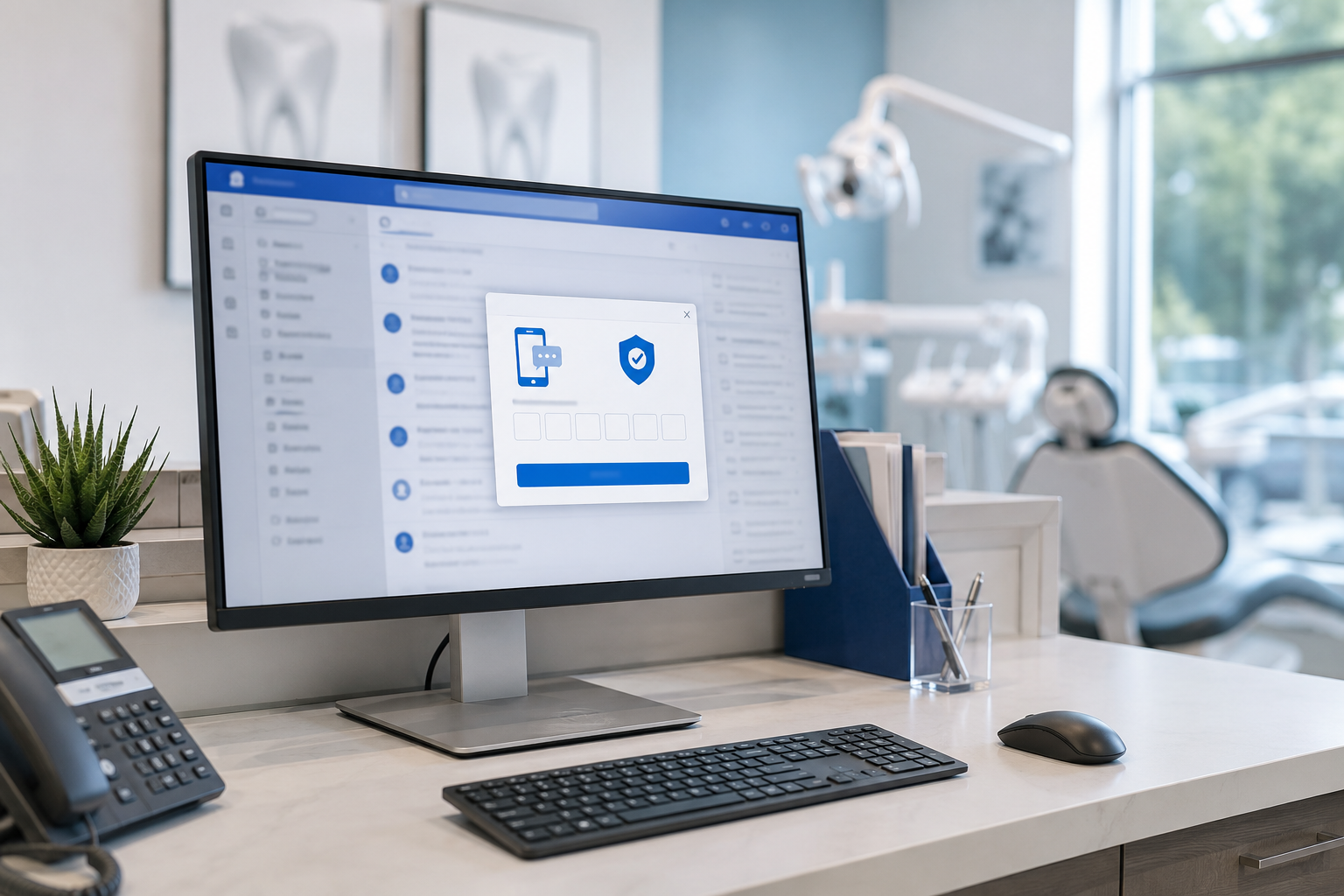
Vendor incident: third-party risk affects multiple dental practices
| Practice | Location | Individuals affected |
|---|---|---|
| Stafford Oral Surgery | Virginia | 7,019 |
| Garrisonville Dental | Virginia | 5,204 |
| Triangle Family Dentistry (Wake Forest) | North Carolina | 908 |
| Triangle Family Dentistry (Cary Park) | North Carolina | 547 |
The potentially compromised information varied by individual and may have included names, addresses, dates of birth, medical information, health insurance information, and Social Security numbers. HIPAA Journal noted that the breach was limited to the vendor's email accounts and associated files, and that there was no unauthorized access to patient medical or dental records.
This is a critical lesson for dental owners: your practice's risk does not stop at your front door. Vendors, software providers, billing partners, and IT providers can all create exposure if they access, store, or transmit patient data.
04What's the pattern behind these dental cybersecurity incidents?
These incidents are different, but the pattern is consistent.
Dental practices are being exposed through:
- Unauthorized network access
- Compromised employee email accounts
- Phishing attacks
- Third-party vendor incidents
- Files containing patient information
- Weak or incomplete monitoring
HIPAA Journal also noted a broader spate of attacks on dental practices and recommended strong, unique passwords, multi-factor authentication, email security solutions, and security awareness training to help reduce phishing and social engineering risk.
That aligns with what Darkhorse Tech sees across modern dental environments: the biggest risks are often not flashy or complicated. They are basic gaps that go unmanaged for too long.
05What do these incidents reveal about weak Dental IT?
Many practices believe they have adequate Dental IT because they have someone to call when a computer stops working. These incidents reveal the difference between basic support and proactive Dental Information Technology.
- 1Limited email securityWithout phishing protection, secure email policies, and suspicious login alerts, dental practices remain vulnerable — email is one of the easiest entry points for attackers.
- 2No multi-factor authenticationPasswords alone are not enough. MFA helps prevent unauthorized access even if credentials are stolen.
- 3Reactive IT supportIf your provider only responds after systems break, your practice is exposed. Modern Dental IT should include monitoring, alerts, maintenance, and prevention.
- 4Poor vendor oversightVendors that access patient information become an extension of your risk surface, and need a written business associate agreement in place.
- 5Inadequate network monitoringUnauthorized access can go unnoticed without real-time visibility into network activity, endpoints, and user behavior.
- 6Weak staff trainingPolicies only work in day-to-day operations when staff are actually trained to follow them.
HHS states that when a covered entity uses a business associate to help carry out healthcare activities and functions, there must be a written business associate contract or arrangement requiring the business associate to protect health information. The HIPAA Security Rule includes requirements for security management processes, including implementing policies and procedures to prevent, detect, contain, and correct security violations — training is what makes those policies work day to day.
06How should dental practices respond?
1. Strengthen email security
Because multiple incidents involved email accounts and phishing, email security should be a top priority. Dental practices should implement:
- Advanced phishing protection
- Spam and malware filtering
- Multi-factor authentication
- Suspicious login alerts
- Secure email policies
- Staff training on phishing and social engineering
Email should be treated as part of your core Dental IT solutions, not just a communication tool.
2. Enforce multi-factor authentication everywhere
MFA should be enabled for email accounts, remote access tools, cloud platforms, admin accounts, practice management systems where available, and vendor access. It's one of the most practical ways to reduce credential-based attacks.
3. Monitor networks and devices continuously
Dental practices need visibility into servers, workstations, firewalls, email accounts, backup systems, cloud platforms, and remote access tools. Continuous monitoring helps detect unusual activity faster and reduces the chance that unauthorized access goes unnoticed.
4. Review vendor access and business associate risk
The vendor-related breach shows why third-party risk matters. Dental practices should review:
- Which vendors access patient data
- Whether business associate agreements are in place
- How vendor access is controlled
- Whether vendor accounts use MFA
- Whether vendor activity is monitored
- What happens if a vendor account is compromised
A vendor can become a major cybersecurity risk if access is not properly managed.
5. Test backups and disaster recovery
Backups are essential, especially when ransomware is possible. Dental practices should confirm backups are running successfully, stored securely, restore-tested regularly, protected from ransomware, and documented with clear recovery procedures. A backup is only valuable if it can restore the practice quickly.
6. Train the team regularly
Technology alone cannot stop every attack. Staff should be trained to recognize phishing emails, suspicious links, fake login pages, unexpected attachments, social engineering attempts, and requests for sensitive information. HIPAA Journal specifically emphasized security awareness training to raise workforce awareness of phishing and social engineering.
7. Work with a dental-specific IT provider
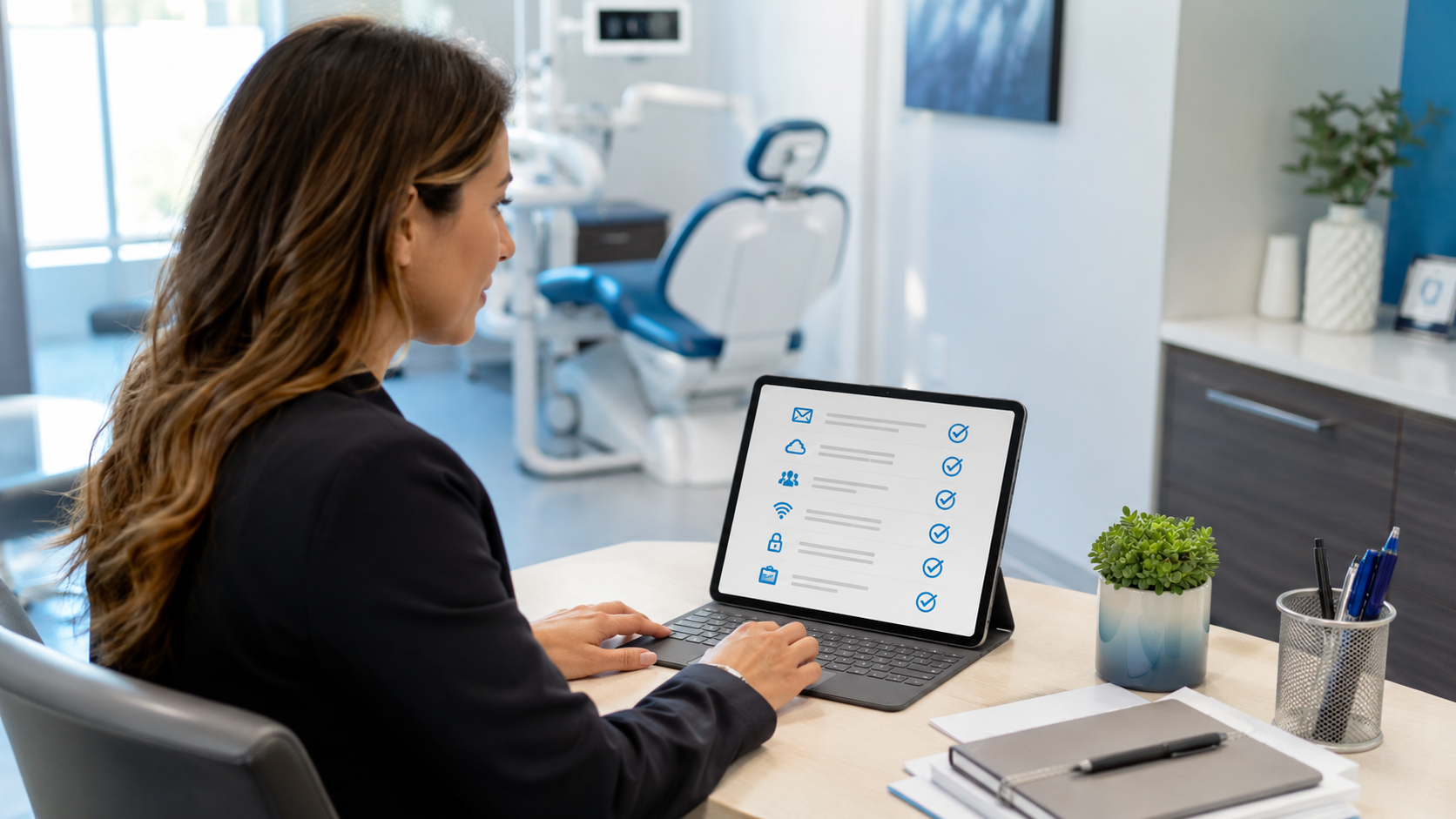
General IT providers may understand computers, but dental practices need support that understands dental workflows, HIPAA expectations, imaging systems, practice management software, downtime impact, and patient data security. A dental-specific IT provider can help align technology with the realities of running a practice. That is where proactive Dental IT services become valuable — the goal is not just to fix issues, but to reduce risk before issues become breaches.
07How does Darkhorse Tech help dental practices reduce cybersecurity risk?
Darkhorse Tech provides Dental IT services and Dental IT solutions designed specifically for dental practices, dental groups, and DSOs. That means support is built around the systems dental teams actually rely on, including practice management software, imaging platforms, email, cloud systems, backups, networks, and security tools.
Darkhorse Tech helps practices strengthen:
- Email security
- Multi-factor authentication
- Network monitoring
- Endpoint protection
- Backup and disaster recovery
- Vendor access controls
- HIPAA-focused technology support
- Dental software and workflow reliability
Most importantly, Darkhorse Tech approaches Dental Information Technology proactively. Instead of waiting for problems to interrupt production, the goal is to identify risks early, protect patient data, and keep practices running securely.
Worried your practice might already be exposed?
Darkhorse Tech can assess your current setup for the same gaps that led to these breaches — email security, MFA, vendor access, and monitoring — before they become incidents.
The bottom line
Cybersecurity incidents reported by multiple dental practices show that dental offices are active targets. The incidents involving Bayside Dental, Aldrich Pediatric Dentistry, Stafford Oral Surgery, Garrisonville Dental, and Triangle Family Dentistry locations point to the same lesson: email security, network monitoring, vendor oversight, and proactive Dental IT are essential. Dental practices need more than basic support — they need secure Dental IT solutions that protect patient data, support HIPAA compliance, reduce downtime, and strengthen long-term trust. If your current IT strategy is reactive, your practice may already be exposed.
.svg)
